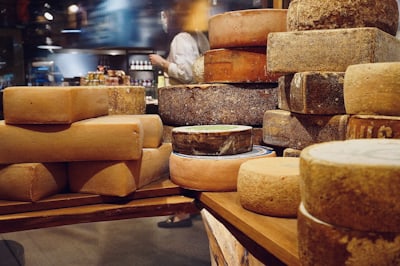
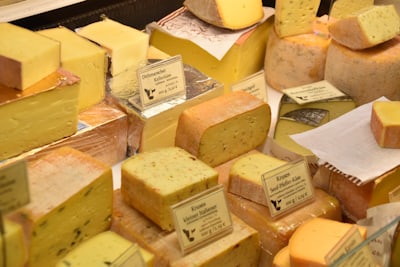
There is a moment in every cheesemaking day — usually in the early morning, when the dairy is still cool and the milk is at its freshest — that feels less like manufacturing and more like a quiet act of faith. You are asking milk to change, slowly and irreversibly, into something that will carry the memory of this particular place and time for months, sometimes years, to come.
Italians have been performing this act of faith for a very long time. Evidence of cheesemaking on the Italian peninsula stretches back to the Bronze Age. By the time of the Roman Republic, cheese production in Italy was already a sophisticated practice, with writers like Columella and Pliny the Elder documenting different varieties and methods. The Romans spread cheesemaking practices across their empire, but Italy remained the centre of gravity — the place where the craft was taken most seriously and developed most deeply.
Why Italy Produces So Many Types of Cheese
Italy is home to more than 400 recognised varieties of cheese, of which approximately 55 carry Protected Designation of Origin (PDO) or Protected Geographical Indication (PGI) status under European law. No other country produces such a diversity of distinct, localised cheeses. To understand why, you need to think about geography.
The Italian peninsula stretches nearly 1,300 kilometres from the Alpine peaks of Valle d'Aosta in the north to the rocky tip of Calabria in the south, and the climate, terrain, and vegetation change dramatically along the way. The animals grazing in the wet Alpine meadows eat entirely different plants from the sheep browsing on the dry limestone hillsides of Sardinia or the lush volcanic soils of Campania. That difference in diet translates directly into a difference in milk — its fat content, its protein structure, its naturally occurring bacteria — and those differences shape the character of the cheese.
Before refrigerated transport and central dairy cooperatives, every valley, every village, every hillside made its own cheese from its own animals' milk. Each community developed techniques suited to their local conditions: the temperature of their caves, the humidity of their cellars, the herbs growing on their pastures, the wood available for smoking. Over centuries, those techniques became traditions, and those traditions became the identities of specific cheeses tied to specific places.

The Role of Milk in Italian Cheese
Italian cheesemaking uses milk from four main sources: cow, sheep, goat, and — though less commonly today — buffalo. Each type of milk produces cheese with a fundamentally different character.
Cow's milk is the most abundant and the most versatile. It is the base for some of Italy's most famous cheeses: Parmigiano-Reggiano, Grana Padano, Gorgonzola, Taleggio, Asiago. Cow's milk cheeses tend to be milder in flavour when young and develop increasing complexity with age, though they rarely achieve the same intensity as sheep's milk cheeses of similar age.
Sheep's milk (latte di pecora) is richer in fat and protein than cow's milk and has a more pronounced, sometimes slightly gamey character that becomes very distinctive in aged cheeses. The great sheep's milk cheeses of Italy — Pecorino Romano, Pecorino Toscano, Pecorino Sardo, Fiore Sardo — are made primarily in the centre and south of the peninsula and in the islands of Sardinia and Sicily, where sheep farming has been the dominant agricultural tradition for millennia.
Goat's milk cheeses are less common in Italy than in France, but the country has several excellent examples, particularly in Piedmont, Liguria, and Lombardy. Goat's milk has a distinctive acidity and a slightly mineral quality that comes through clearly in fresh cheeses and softens but remains recognisable in aged ones.
Buffalo milk — specifically from the Italian water buffalo breed — is used almost exclusively to make Mozzarella di Bufala Campana, the PDO-protected mozzarella produced in Campania and parts of adjacent regions. Buffalo milk is extraordinarily rich, with nearly double the fat content of typical cow's milk, which gives Mozzarella di Bufala its characteristic creaminess and slightly tangy flavour.
Artisan vs. Industrial Production
The distinction between artisan Italian cheese and industrial production is not simply a matter of scale — it reflects fundamentally different approaches to what cheese is and what it is for.
Industrial cheese production aims for consistency above all else. The milk is standardised, the cultures are precisely controlled, the ageing conditions are mechanically regulated, and the result is a product that tastes essentially the same regardless of the season, the location, or the year. This consistency has obvious advantages for distribution and shelf management, and it makes Italian cheese accessible to a far wider audience than artisan production could ever supply.
Artisan production, by contrast, embraces variability as an asset rather than a problem. At a dairy like ours in San Gimignano, the milk changes week by week as the seasons change, and the cheese changes with it. The spring Pecorino — made from the milk of sheep grazing on fresh growth after the winter rains — has a freshness and brightness that the autumn Pecorino lacks. The autumn cheese, made from the richer milk of sheep that have grazed all summer, has more depth and weight. Neither is better; they are different expressions of the same place at different moments.
Artisan cheesemakers also tend to use traditional starter cultures — communities of naturally occurring bacteria that have been maintained in the dairy for generations, often passed down from one cheesemaker to the next. These cultures contribute complexity and distinctiveness to the finished cheese that commercial freeze-dried cultures cannot replicate.
Protected Designations and What They Mean
Italy's PDO and PGI cheese designations exist to protect both producers and consumers. A cheese bearing a PDO designation — such as Parmigiano-Reggiano DOP or Pecorino Toscano DOP — must be produced within a defined geographical area using specified methods and ingredients. Independent certification bodies inspect and verify production at every stage.
For consumers, PDO status is a reliable signal of authenticity and regional specificity. A wheel of genuine Parmigiano-Reggiano was made within the provinces of Parma, Reggio Emilia, Modena, Bologna, or Mantua from unpasteurised milk, using traditional methods and aged for a minimum of twelve months. An imitation product sold as "Parmesan" may look similar but is almost certainly a different product with a different flavour profile and a very different relationship to place.
That said, PDO certification is not a guarantee of exceptional quality — it is a guarantee of authenticity. Some of the most interesting artisan Italian cheese being made today falls outside PDO boundaries, produced by smaller dairies experimenting with traditional techniques in ways that would not meet the strict specifications of the designation system.
The Future of Italian Cheesemaking
Italian cheese production is at an interesting crossroads. On one hand, industrial consolidation continues to reshape the dairy sector, with large cooperatives absorbing smaller farms and standardising production. On the other hand, there is growing interest — particularly among younger producers and younger consumers — in genuine artisan methods, provenance, and the kind of flavour complexity that only comes from traditional practice.
At Latteria Santo Stefano, we are cautiously optimistic. The visitors who come to our dairy each year are genuinely curious. They want to understand where their food comes from. They can tell the difference between real Italian cheese and a pale industrial imitation, and they care about that difference. That interest, we believe, will help keep the artisan tradition alive — not as a museum piece, but as a living, evolving practice capable of surprising people for generations to come.
The milk arrives each morning. The copper vat fills. The craft begins again.
Continue Reading